
Largest-Ever Study of Cardiac Screening in Young People Shows Heart Checks Save Lives
Major research paper underpins the calls of leading cardiac charity CRY, which first pioneered and funded an internationally acclaimed screening programme 30 years ago. The screening outcomes of more than 100,000 young people were analysed over a 10-year period.
- Journal of the American College of Cardiology
- 10-year study (2008–2018)
- 25 researchers
- The screening outcomes of more than 104,000 young people (aged 14–35) were analysed over a 10-year period
- The non-invasive, inexpensive ECG is flagged as being a ‘highly sensitive’ screening tool
- Over 40% of those diagnosed received a significant intervention (including corrective heart surgery)
- This study publicly calls into question the UK’s current cardiac screening policy
- Major research paper underpins the calls of leading cardiac charity, which first pioneered & funded an internationally acclaimed screening programme 30 years ago
1 in 300
London, UK — The largest-ever study of cardiac screening in young people has found that heart checks (using an electrocardiogram, ECG, a simple and yet very effective diagnostic tool) are routinely identifying potentially life-threatening conditions, requiring life-saving treatment.
The much-anticipated report also suggests that repeat screenings are necessary to identify and protect more young individuals at risk, with the data indicating that a small percentage (0.08%) of the cohort [when followed up over a period 6 years] went on to experience a serious cardiac event, advocating that more regular screening is required to identify conditions – and that a ‘one off’ test is not always sufficient.
Funded by the charity and campaigning organisation, Cardiac Risk in the Young (CRY), a team of 25 researchers – based at City St George’s, University of London and St George’s University Hospitals NHS Foundation Trust – analysed outcomes from more than 104,000 young people aged 14 to 35 (with a median age of 23) who’d had their hearts tested though CRY’s nationwide screening programme, across a period of 10 years (2008-2018).
The unique study was the first of its kind to use a systematic follow-up of all screened individuals in order to obtain as complete data review as possible.
The ‘game-changing’ results of this hugely important paper – published in the prestigious Journal of the American College of Cardiology (JACC) – provide the most comprehensive overview to date of the benefits (and limitations) of cardiac screening in the general population, showing the sensitivity of current testing protocols stands at an impressive 77% with a very low ‘false positive’ rate of just 2.1%.
And, at a time when the UK’s National Screening Committee finds itself under scrutiny for its rejection of proposals to support the implementation of preventive screening programmes for other disease areas (e.g. prostate cancer), charity campaigners and bereaved families hope this new paper will bring further evidence and armoury to the ongoing battle for greater investment into the prevention of young sudden cardiac deaths, and greater access for young people to cardiac screening initiatives.
A key finding from the paper, entitled, “Outcomes of a charity-led Cardiac Screening Programme for Young Individuals in the United Kingdom”, concurred with previous data published by CRY funded researchers that one in 300 young people screened and evaluated by CRY’s cardiac experts (specially trained in the interpretation of ECG tests) were identified with heart conditions that could have fatal consequences, if left unmonitored and untreated.
One in 300 young people screened and evaluated by CRY’s cardiac experts were identified with heart conditions that could have fatal consequences, if left unmonitored and untreated. More than 40% (41%) of those diagnosed went on to receive significant ‘risk-reducing’ interventions including implantable defibrillators, pacemakers, cardiac ablation surgery, and, in 2 cases, heart transplantation.
Researchers reported that more than 40% (41%) of those diagnosed during the 10-year period, went on to receive significant ‘risk-reducing’ interventions including implantable defibrillators, pacemakers, cardiac ablation surgery, and, in 2 cases heart transplantation. The remaining cohort identified with cardiac issues, were offered treatment pathways (including medication, monitoring and important lifestyle and exercise advice).
The study highlighted why there needs to be more investment into screening to enable tests to be repeated; the thorough follow up of all those screened showed that 0.08% of individuals who had a normal ECG result at time of their screening were later diagnosed with conditions associated with Young Sudden Cardiac Death (YSCD), including 0.03% (that’s one in every 3,333 people tested) who suffered a sudden cardiac arrest or YSCD (on average, 4 years after the original test).
Such conditions may be ‘acquired’ in time, through external (or even, unknown factor), or present at an older age which again reinforces the urgent need for not only more screening but also greater research into the causes of YSCD.
Young Sudden Cardiac Conditions: It’s Not Just an Issue Affecting Athletes
Historically cardiac screening programmes in asymptomatic individuals have focused on elite athletes [based on the widely acknowledged belief that whilst sport does not cause young sudden cardiac death, it can exacerbate the potential dangers of hidden heart conditions]. However, CRY has been providing screening services in the general population since 1997 and always advocated screening should not be limited to just athletes.
Interestingly, this study found no significant difference in risk between athletes and non-athletes. This clearly raises questions about current screening policies, which – whilst having been largely adopted by most sporting bodies – do not include the general population. Indeed, the majority of participants in the study were not competitive athletes (just 9%) – yet serious conditions were still detected across the cohort.
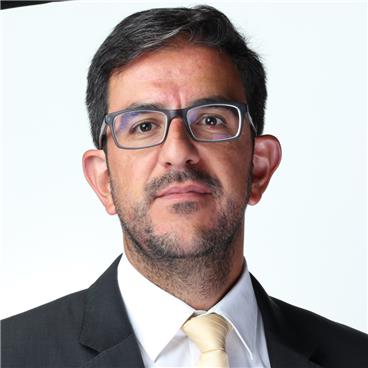
This study shows that cardiac screening can save lives. Across a decade of screening in a general population of 14–35-year-olds we identified hundreds of young people with dangerous heart conditions who were able to receive treatment before tragedy struck. But it also highlights that a single screening is not enough. Some conditions develop later, and others are very difficult to detect early. So, if we want to further reduce sudden cardiac deaths in young people, we need to develop even stronger and even smarter prevention strategies.”
Professor Michael Papadakis - Lead Researcher & Professor of Cardiology at City St George’s, University of London and Honorary Consultant Cardiologist at St George's University Hospitals NHS Foundation Trust
Professor Papadakis added that current studies focus on expanding numbers and follow-up, with the team hoping to report on 300,000 individuals in the next 2 years. He highlighted the potential role of Artificial Intelligence (AI) in detecting ECG features suggestive of disease that the naked eye cannot see — with AI having the potential to considerably enhance the power and accuracy of ECG as a screening tool, as well as massively upscaling a nationwide screening programme and significantly reducing the associated costs.
Every week in the UK, 12 young people (aged 35 and under) die suddenly from a previously undiagnosed heart condition. In 80% of cases, there will be no symptoms or warning signs, which is why organisations such as CRY believe proactive cardiac screening is such a vitally important and powerful tool.
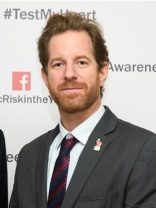
This long-awaited and substantial research paper has clearly shown that young lives can be saved through screening. However, it has also highlighted the importance of repeat screening, as not all deaths are prevented by a one-off screening between the age of 14-35. This research has clearly demonstrated it is no longer a question of IF screening saves lives, but now about how many lives screening saves and how to prevent more tragedies. We now have the evidence to support our proposition that screening in young people, in the general population, needs to be repeated – as occurs across much of elite sport, with routine cardiac screening being carried out every 1-5 years. Future CRY-funded research will determine the best frequency for screening.
Dr Steven Cox - CEO Cardiac Risk in the Young (CRY)
Dr Cox announced a major push to expedite CRY’s research into AI and machine learning, with CRY’s 2030 strategic Vision seeing the launch of an AI Cardiac Screening and Research Project, translating our knowledge and expertise from the last 30 years. He noted that with the advent of wearable smart devices, screening will become accessible to all in the near future — but the AI and ML technology is only as good as the data which feeds the algorithms.
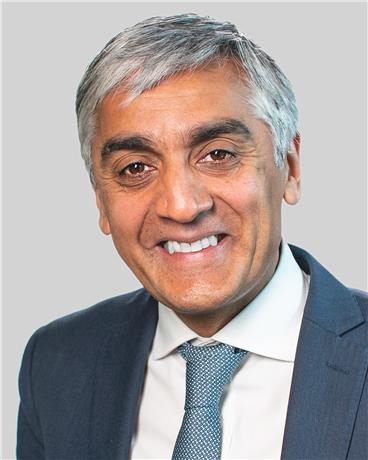
Looking back across the past three decades — since the inception of CRY in 1995 — it is hard to imagine that we would reach such a pivotal moment; a study of this magnitude, with the potential to have an impact for so many years to come. This research has shown that screening can identify young people at risk, some of whom have subsequently received implantable cardioverter defibrillators (ICDs) that have saved their lives by correcting dangerous heart rhythms, while others have been identified early enough to undergo lifesaving heart transplantation. When we began this journey, few believed it would be possible to prevent sudden deaths in young people but today, the importance of our research is clear, and it points to a future in which many more young lives will be saved. And, it should never be forgotten that this seminal piece of work – along with CRY’s impressive portfolio of research is only possible due to the exceptional and tireless fundraising efforts of bereaved families across the UK who somehow manage to see beyond their own grief to do all they can to prevent other families from going through a similar, devastating experience. Thank you.
Professor Sanjay Sharma - CRY Consultant Cardiologist for 30 years; one of the world’s leading experts in sports cardiology and inherited cardiac conditions
Key Findings at a Glance
From “Outcomes of a Charity-Led Cardiac Screening Programme for Young Individuals in the United Kingdom” — JACC, February 2026
104,369
Young People Screened
Aged 14–35 (median age 23), tested through CRY’s nationwide programme across 10 years. The UK’s largest-ever study of cardiac screening in young people.
1 in 300
Hidden Heart Conditions in Young People
Potentially life-threatening conditions that could have fatal consequences if left unmonitored and untreated — identified by CRY’s specialist cardiac experts.
41%
Received Life-Saving Treatment
Of those diagnosed, 41% received significant risk-reducing interventions: implantable defibrillators, pacemakers, cardiac ablation surgery, and heart transplantation.
77%
Screening Sensitivity
The ECG-based screening protocol demonstrated 77% sensitivity for detecting conditions associated with sudden cardiac death, with a very low false positive rate of 2.1%.
0.08%
Developed Conditions post screening
A small but significant number who had a normal result at screening were later diagnosed with cardiac conditions — reinforcing the case for repeat screening.
9%
Were Competitive Athletes
The vast majority of participants were non-athletes, yet serious conditions were detected across the entire cohort. Risk is equal regardless of athletic status.
From Evidence to Innovation
This research proved screening saves lives. It also revealed where we need to do more. 86 young people went on to be diagnosed with conditions in the years following the initial screening which means a one off screening is not enough.
That’s why CRY is launching the AI Cardiac Screening & Research Fund, a major investment in artificial intelligence and machine learning to support the specialist cardiologists when reviewing ECGs, to bring us closer to a time when cardiac screening will be accessible to every young person.
AI-Assisted ECG Interpretation
Built on 104,369 expert-interpreted ECGs
Wearable Monitoring Research
Bridging the gap between screenings with continuous cardiac monitoring
Universal Screening
Making cardiac screening achievable for all 15 million young people in the UK
This research makes the case unequivocally: screening saves young lives. But currently, there is no government-funded cardiac screening programme for young people in the UK. A parliamentary petition is calling on the Government and the UK National Screening Committee to change that.
This petition was created by Gill and Stephen Ayling in memory of their son, Nathan Bryan. Their advocacy honours Nathan’s memory and all those lost to Young Sudden Cardiac Death — and could save countless young lives. #YSCD
The petition calls on the Government to:
- Fund population cardiac screening for every young person when they reach age 14, using a review of family history and ECG, followed up where necessary with echocardiogram
- Launch a national cardiac awareness campaign to stop needless deaths — because 12 young people aged 35 and under die suddenly from heart conditions in the UK every week, many showing no symptoms
At 100,000 signatures, the petition will be considered for debate in Parliament. Every signature brings us closer to a world where no young person dies from an undiagnosed heart condition.